
When Will Ramadan Start for 2026?
Muslims around the world eagerly await Ramadan, the holy month of fasting, prayer, and spiritual reflection. Ramadan is the ninth month of the Islamic lunar calendar, and it holds immense significance as a time for devotion, self-discipline, and community worship. Unlike the Gregorian calendar, which is solar-based, the Islamic calendar follows the lunar cycle, meaning that the dates of Ramadan shift roughly 10–12 days earlier each year.
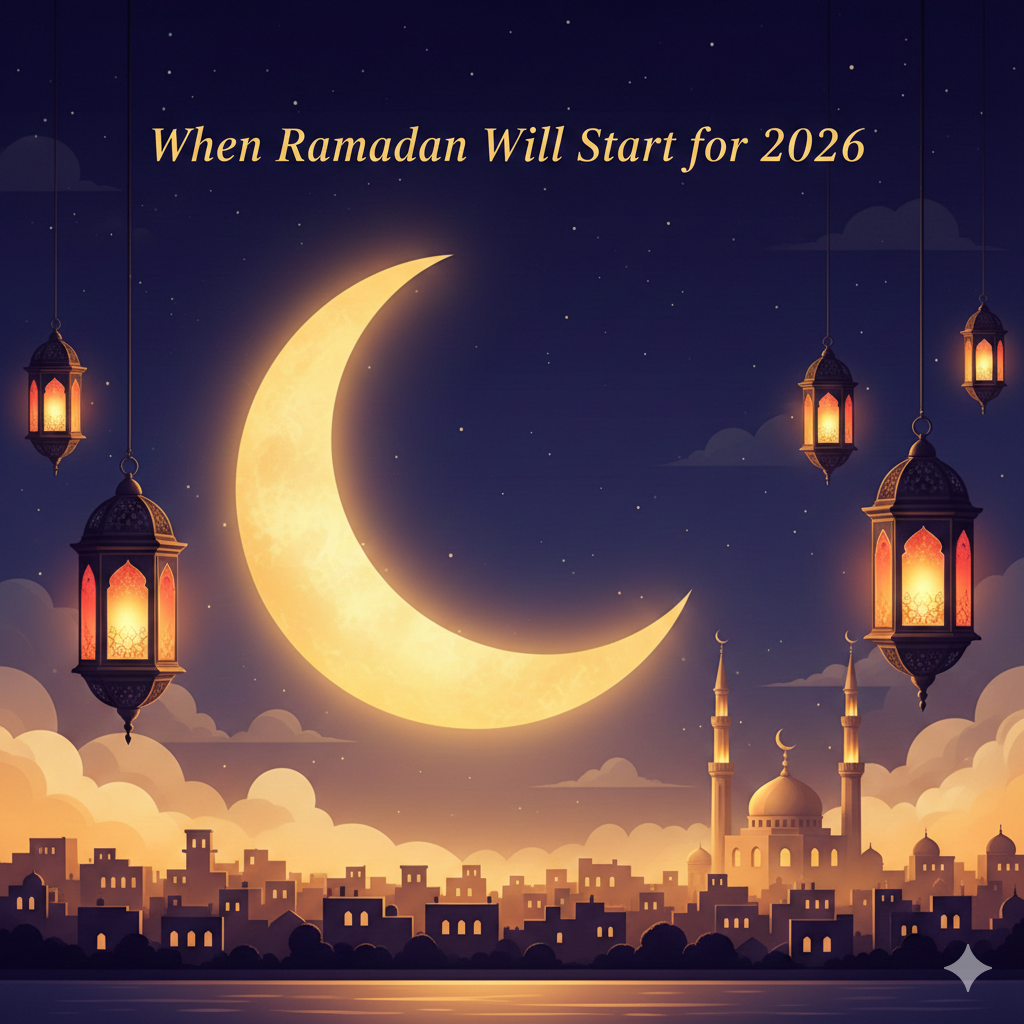
For 2026, Ramadan is expected to begin in mid-February, but the exact starting date depends on the sighting of the new crescent moon (hilal). This tradition of moon sighting has been followed for centuries and remains central to determining the start of the fasting period in different countries.
Expected Start Date for Ramadan 2026
Astronomical predictions suggest that Ramadan 2026 will likely begin between Tuesday, 17 February, and Wednesday, 18 February. Most regions are expected to observe the first full day of fasting on Wednesday, 18 February 2026. However, some countries, including Saudi Arabia, the United Arab Emirates, and Pakistan, may officially begin on Thursday, 19 February 2026, depending on the local sighting of the crescent moon.
The variation in starting dates is common because different regions may sight the new moon on different evenings due to geographical location, weather conditions, and atmospheric clarity. As a result, Muslims in one country may begin fasting a day earlier or later than those in another country.
Why the Start Date Varies
The Islamic calendar is purely lunar, meaning each month begins with the sighting of the new moon. Unlike fixed solar calendars, which have uniform months and dates, lunar months are determined by actual observation. This practice ensures that Ramadan remains a month tied to the natural cycles of the moon rather than a fixed solar date.
Because the crescent moon may be visible at different times in different parts of the world, Ramadan can officially start on slightly different dates depending on where a person lives. Communities often rely on local religious authorities or committees to confirm the sighting of the moon. This tradition maintains the cultural and religious authenticity of the month, while also creating minor variations in the global calendar.
The Spiritual Significance of Ramadan
Ramadan is a time for fasting from dawn to sunset, which is known as sawm. Fasting is one of the Five Pillars of Islam and serves as a form of spiritual discipline. It encourages Muslims to exercise self-control, engage in reflection, and deepen their connection with God.
During Ramadan, Muslims rise early for a pre-dawn meal called sehri and break their fast at sunset with iftar, often in the company of family, friends, and community members. In addition to fasting, Ramadan is a time for increased prayer, recitation of the Quran, charitable giving (zakat), and acts of kindness. The month fosters a sense of community, gratitude, and compassion.
Duration of Ramadan
Ramadan lasts 29 or 30 days, depending again on the sighting of the crescent moon for the following month, Shawwal. The end of Ramadan is marked by the festival of Eid al-Fitr, a joyous celebration of breaking the fast. Eid includes communal prayers, sharing meals, and giving charity to the less fortunate. In 2026, Eid al-Fitr is expected to fall on 19 or 20 March, depending on moon sighting confirmations.
Preparing for Ramadan
Many Muslims begin preparing for Ramadan weeks in advance. Preparation may include spiritual reflection, planning for charitable activities, and organizing family meals for sehri and iftar. Some also use this time to set personal goals for improving character, strengthening faith, and performing good deeds.
Health considerations are also important, as fasting can be physically demanding. People with medical conditions, pregnant women, or those unable to fast are exempt, but may provide charity or other forms of contribution instead.
Global Observance
Ramadan is observed worldwide, creating a sense of unity among Muslims across countries and cultures. Despite differences in moon sightings, the month encourages collective practices and a shared sense of devotion. Markets, mosques, and community centers often prepare special programs to accommodate worshippers and families during Ramadan.
In addition, Ramadan influences social and economic life. Businesses may adjust working hours, schools may modify schedules, and community services often increase to accommodate charitable distributions and social programs.
| Event | Expected Date (2026) |
|---|---|
| Crescent moon sighting night | Evening of 17 February 2026 (expected) |
| First day of Ramadan fasting | 18 or 19 February 2026 (depending on location) |
| End of Ramadan | 18 or 19 March 2026 |
| Eid al‑Fitr | 19 or 20 March 2026 (start of Shawwal) |
❓ Frequently Asked Questions (FAQs)
1. When will Ramadan start in 2026?
Ramadan 2026 is expected to start on 18 February 2026 for most regions. Some countries may begin on 19 February 2026 depending on the local crescent moon sighting.
2. Why do the dates of Ramadan change every year?
Ramadan follows the Islamic lunar calendar, which is based on the moon phases. This means the start of the month shifts about 10–12 days earlier each year in the Gregorian calendar.
3. How long does Ramadan last?
Ramadan lasts 29 or 30 days, depending on the sighting of the crescent moon for the next month, Shawwal. The month concludes with Eid al-Fitr, the festival of breaking the fast.
