Understanding Umrah: A Spiritual Journey of Renewal and Devotion
What Is Umrah? The Sacred Journey Beyond Obligation
In Islam, Umrah holds a special place as a journey of purification, humility, and devotion to Allah. Though not obligatory like Hajj, Umrah is a deeply recommended act of worship that symbolizes a Muslim’s yearning for closeness to their Creator.
The word Umrah in Arabic means “to visit” — specifically, to visit the Sacred House of Allah (Kaaba) in Makkah. Unlike Hajj, Umrah can be performed at any time of the year and takes only a few hours, but its spiritual impact lasts a lifetime.
For many Muslims, performing Umrah is not just a physical journey — it’s an inward transformation. It renews the heart, cleanses sins, and rekindles the connection between servant and Lord.
Umrah vs Hajj: The Key Difference
Although Umrah and Hajj share sacred rites and the same destination — Makkah — they differ in terms of obligation, timing, and rituals.
| Aspect | Hajj | Umrah |
|---|---|---|
| Obligation | Fard (obligatory once in a lifetime for those able) | Sunnah (highly recommended, not compulsory) |
| Timing | Specific dates in Dhul-Hijjah | Anytime of the year |
| Duration | 5–6 days | 2–4 hours |
| Rituals | Includes Mina, Arafat, Muzdalifah | Only Tawaf, Sa’i, and Halq (hair cutting) |
| Reward | Fulfills a pillar of Islam | Brings forgiveness and spiritual renewal |
Both are immense acts of worship, but Umrah offers Muslims a way to experience the sanctity of the pilgrimage even outside Hajj season.
The Spiritual Significance of Umrah
Umrah represents a renewal of the soul.
Every step taken within the sacred precincts of Makkah brings a believer closer to Allah’s mercy. The Prophet Muhammad ﷺ said:
“The performance of one Umrah to another expiates the sins committed between them.”
(Sahih al-Bukhari)
This hadith reflects Umrah’s incredible reward — forgiveness, purification, and spiritual rebirth. It is a moment of self-reflection and surrender where the heart finds peace amidst the chaos of life.
Performing Umrah helps one disconnect from worldly distractions, remember the Hereafter, and reaffirm one’s purpose: to worship Allah sincerely.
Step-by-Step: The Rituals of Umrah
1. Ihram – The State of Purity and Intention
The journey begins with niyyah (intention). Pilgrims enter the state of Ihram — a sacred condition of spiritual purity — wearing simple white garments that erase all social distinctions.
Men wear two unstitched white cloths, and women wear modest, simple clothing.
At this stage, the pilgrim declares:
“Labbayk Allahumma Umrah” — Here I am, O Allah, for Umrah.
Ihram symbolizes equality, humility, and submission to Allah’s will.
2. Tawaf – Circling the Kaaba
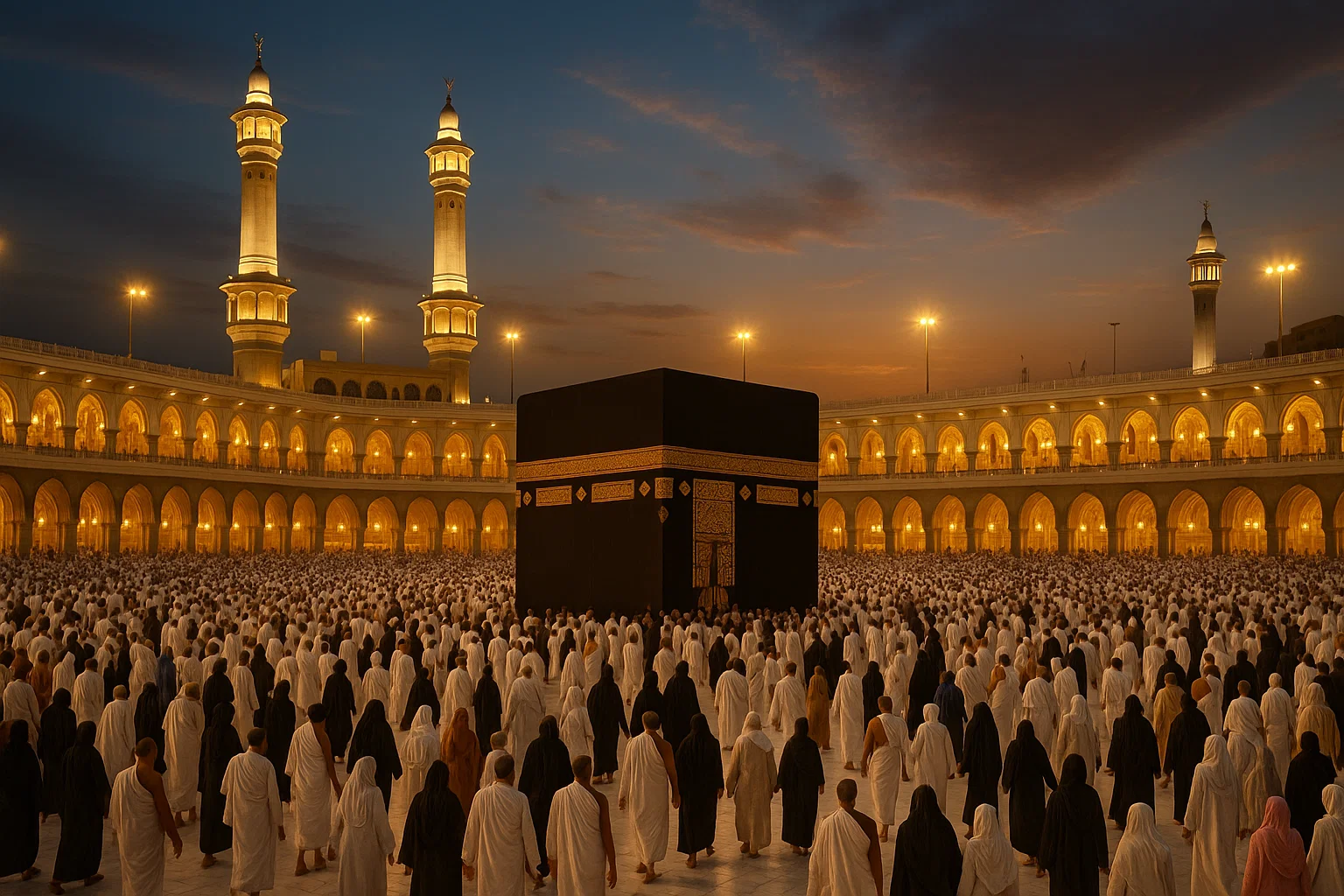
After entering Masjid al-Haram, pilgrims perform Tawaf, walking around the Kaaba seven times in a counterclockwise direction.
This act mirrors the unity of believers — all revolving around one center of faith, symbolizing devotion to Allah alone.
Every round of Tawaf is an act of remembrance, filled with silent prayers, gratitude, and reflection.
3. Sa’i – The Journey of Hagar (Hājar)
Next is Sa’i, walking seven times between the hills of Safa and Marwah.
This ritual commemorates the story of Hājar, wife of Prophet Ibrahim (A.S.), who ran between the two hills searching for water for her infant son, Ismail.
Her faith and patience were rewarded when Allah caused the Zamzam spring to gush forth — a miracle that still nourishes pilgrims today.
Sa’i is a lesson in trust and perseverance: when you seek Allah sincerely, He never lets you down.
4. Halq or Taqsir – A Symbol of Renewal
Finally, men either shave their heads (Halq) or trim their hair (Taqsir), while women cut a small portion from the end of their hair.
This marks the completion of Umrah — a symbol of cleansing, humility, and rebirth.
After this, the state of Ihram ends, and the pilgrim returns spiritually renewed and forgiven, as pure as the day they were born.
The Benefits of Performing Umrah
- Forgiveness of Sins: Each Umrah wipes away sins between the previous and current pilgrimages.
- Spiritual Renewal: A cleansing of heart and soul, fostering a deeper connection with Allah.
- Unity of the Ummah: Pilgrims from every nation gather in one sacred space, embodying global Muslim brotherhood.
- Inner Peace: The rituals bring serenity, reflection, and contentment.
- Answer to Prayers: Many believe Umrah is a time when duas are especially accepted.
When Can You Perform Umrah?
Unlike Hajj, Umrah can be performed anytime during the year. However, many believers choose to go during Ramadan, as the Prophet ﷺ said:
“Umrah in Ramadan is equivalent to Hajj with me.”
(Sahih al-Bukhari)
Performing Umrah during the blessed month multiplies its rewards and magnifies the spiritual experience.
Modern Ease: Planning Your Umrah Journey
With today’s technology and global accessibility, planning Umrah has become easier than ever. Pilgrims can now find step-by-step guides, online visa applications, and detailed itineraries that help them focus more on worship than logistics.
At QuranAdept, we believe this digital era should serve faith, not distract from it — and learning about the beauty of Umrah online helps more Muslims prepare their hearts before their feet even touch Makkah.
Conclusion: A Journey That Never Truly End
While Umrah ends after a few sacred steps, its impact lasts a lifetime.
Every pilgrim returns home spiritually lighter, emotionally renewed, and closer to Allah.
It’s not just a ritual — it’s a dialogue between the heart and its Creator.
May Allah grant every believer the opportunity to visit His House, perform Umrah with sincerity, and return with hearts purified by His mercy.
Ameen.
FAQs
Q1. What is Umrah in Islam?
Umrah is a non-obligatory pilgrimage to Makkah performed to seek Allah’s pleasure and forgiveness.
Q2. How is Umrah different from Hajj?
Hajj is obligatory once in a lifetime and has specific dates; Umrah can be performed anytime.
Q3. How long does Umrah take?
Typically between 3 to 5 hours, depending on crowd and pace.
Q4. Can women perform Umrah alone?
Yes, women can perform Umrah, though it’s recommended to travel with a mahram depending on travel regulations.
Q5. What rewards come with Umrah?
Forgiveness, peace, spiritual renewal, and multiplied blessings from Allah.
Embark on a Journey of Faith — Learn with QuranAdept
At QuranAdept, we help believers explore the deeper meanings behind Islamic acts of worship like Umrah and Hajj.
Discover the spiritual wisdom of Quran, Sunnah, and Islamic traditions through guided insights and courses.
Visit QuranAdept.com and begin your journey of faith today.
