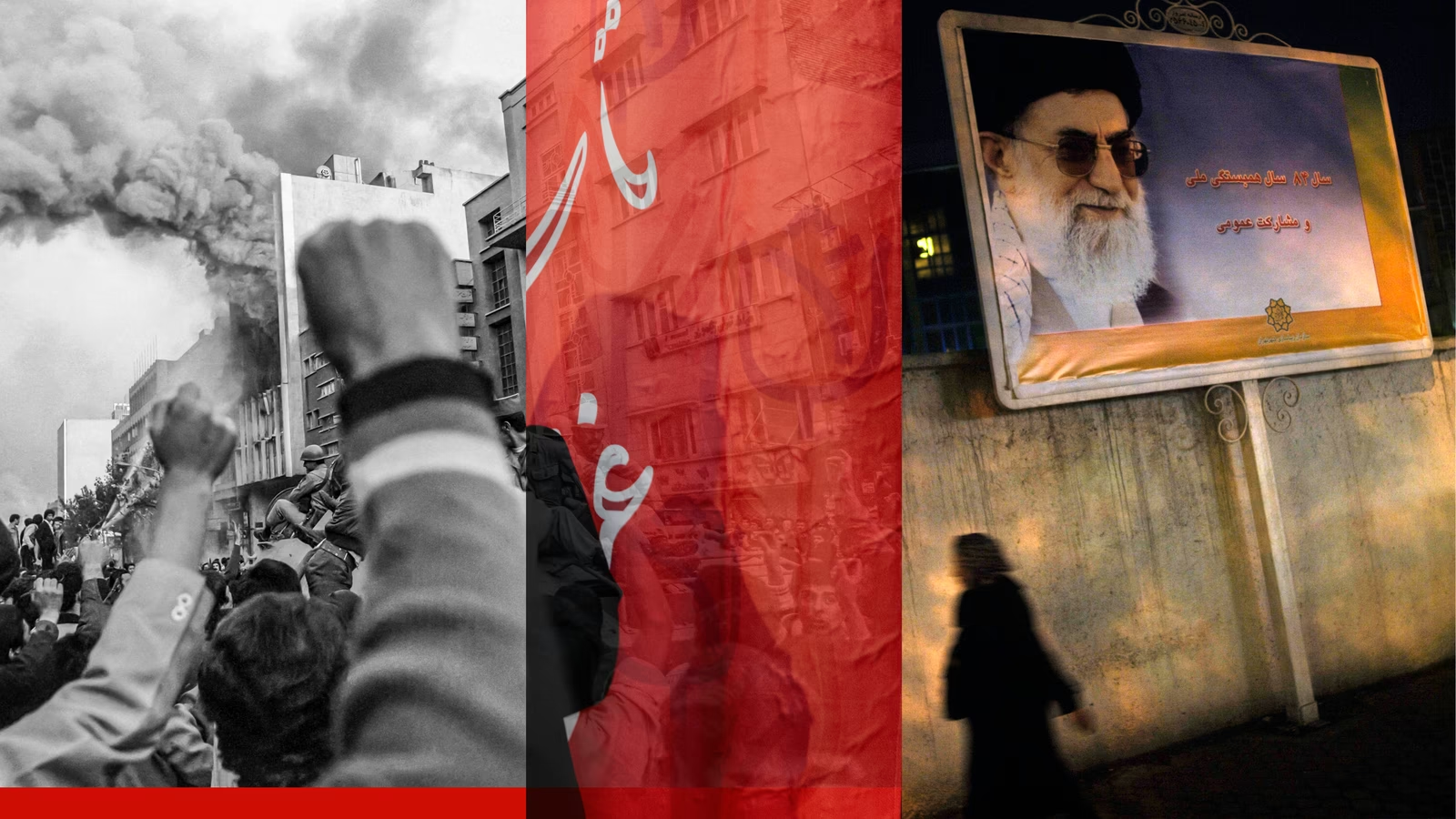
Iran’s Predatory Contract With Its People Exposes Deep Breakdown in State‑Society Relations
Tehran — The Islamic Republic’s enduring grip on power appears increasingly untenable as recent violence and state brutality expose a stark breakdown in the relationship between the government and Iran’s citizens. Analysts now describe the modern Iranian state as governed not by a consensual social contract, but by what amounts to a predatory contract that extracts compliance through repression rather than legitimacy.
In early January 2026, Iran experienced one of the deadliest acts of state violence in its modern history. Order issued at the highest level of government led to an intense two-day crackdown that local health officials estimate may have cost tens of thousands of civilian lives over January 8 and 9. That event—seen by many Iranians as a climax of decades of repression—has intensified questions about the regime’s moral authority and its long-term viability.
A Contract Without Consent
Since the Islamic Republic was established in 1979, its leaders have invoked divine authority and revolutionary legitimacy to justify vast powers and minimize political dissent. Traditional theories of political legitimacy rest on a reciprocal social contract: citizens cede some freedoms in exchange for security, provision of services, and basic protections. In Iran’s case, that contract has become one-sided, oppressive, and extractive.
The term predatory contract has been used by analysts to describe the dynamic between the regime and its people: a framework in which the state extracts political obedience and economic sacrifice while providing little in return besides coercive order. This arrangement has eroded any genuine basis for consent, leaving vast swaths of the population alienated and distrustful of state institutions.
January Violence and Public Reaction
The crackdown in January 2026 followed months of simmering discontent that began as localized protests and later spread to major cities. Longstanding grievances—including economic hardship, inflation, and political repression—have fueled repeated waves of dissent over the past several years. The unprecedented scale of recent violence highlighted a widening gulf between the aspirations of ordinary Iranians and the state’s readiness to respond with force.
Public reaction has been complex. In urban centers such as Tehran and Isfahan, vigils and memorials for victims circulated widely, even as activists called for accountability and justice. Political discourse remains highly restricted, with authorities tightly controlling public assemblies and digital spaces. This mix of fear and frustration reflects a deepening crisis of legitimacy for the regime.
Eroding Foundations of Legitimacy
The concept of a social contract traditionally implies that citizens recognize the authority of government because it delivers essential protections and benefits. But in Iran’s case, decades of economic struggles, high unemployment, currency depreciation, and international isolation have left many citizens questioning the very purpose of the state. Critics argue that successive governments have prioritized regime survival and ideological purity over public welfare, undermining any trust that may have remained.
Political analysts note that when the obligations of governance are seen as extractive rather than protective, citizens become less inclined to consent to that governance. In extreme cases, such conditions can lay the groundwork for systemic instability or transformation. Whether Iran’s present crisis will trigger such changes remains uncertain, but the idea of a predatory contract suggests a state in deep disrepair—one that governs through coercion rather than consent.
Regional and International Implications
Iran’s internal breakdown has implications far beyond its borders. As a major regional power with active involvement in Middle Eastern geopolitics, shifts in domestic stability could affect conflict dynamics in neighboring countries, influence negotiations over nuclear and security issues, and alter long-standing alliances. The perception of a regime isolated from its own population adds complexity to diplomatic efforts and may harden international stances toward Tehran.
Even as the Iranian government emphasizes national security and ideological resilience, external analysts point to the disconnect between state rhetoric and societal reality as a critical fault line. A population that feels betrayed by its leaders is less likely to support long-term policies that demand sacrifice without reciprocal gains.
What Comes Next
Observers are closely watching whether this moment will mark a turning point in Iran’s modern history. The events of January have put a spotlight on the structural tensions at the heart of Iranian governance—a state backed by force rather than consent. Whether this intensifies demands for political change, further entrenches authoritarian control, or leads to an unpredictable middle path remains to be seen.
For now, Iranians and international watchers alike are assessing the implications of a government increasingly detached from the interests and wellbeing of its people. The narrative of a predatory contract may become central to how the Islamic Republic is understood in both domestic and global contexts moving forward.
Frequently Asked Questions (FAQ) – Iran’s Predatory Contract With Its People
What is meant by Iran’s predatory contract with its citizens?
Iran’s predatory contract refers to a one-sided system where the government extracts compliance and obedience from citizens while providing minimal protections, services, or legitimacy in return.
Why did the Iranian regime face backlash in January 2026?
The regime carried out a violent crackdown during widespread protests, leading to significant civilian casualties. This event highlighted the growing disconnect between the government and its citizens.
What factors contribute to the breakdown of legitimacy in Iran?
Economic hardship, inflation, high unemployment, political repression, and restrictions on civil liberties have eroded trust and legitimacy in the Iranian state.
