

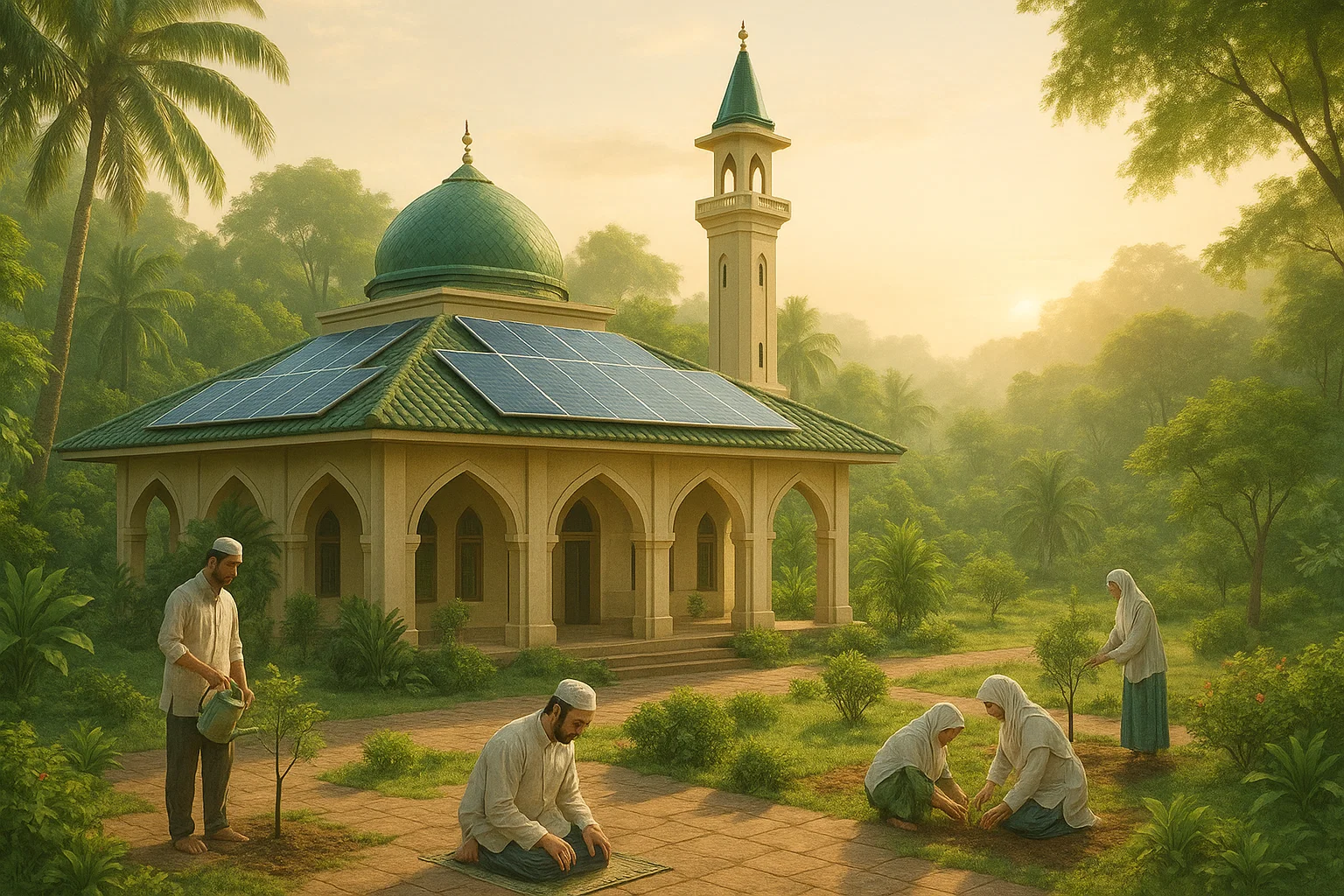
Green Islam: How Faith and Environment Unite in Indonesia’s Eco-Islamic Movement
In recent years, Indonesia — the world’s largest Muslim-majority nation — has become a hub for a growing spiritual and environmental revolution: the Green Islam Movement. Rooted in the Qur’anic teachings of stewardship (khalifah) and balance (mizan), this movement blends deep faith with ecological responsibility, proving that protecting the Earth is not just a civic duty but a divine command.
As the world faces climate change, pollution, and resource depletion, Indonesia’s eco-Islamic initiatives remind us that the environment and spirituality are interconnected — and that Muslims worldwide can lead the charge toward a more sustainable future.
The Birth of the Green Islam Movement
The movement began with small community efforts by Islamic scholars, clerics, and students who emphasized environmental ethics within mosques and madrasas. Sermons began referencing verses like:
“And do not cause corruption upon the earth after its reformation…” (Qur’an 7:56)
Soon, environmental stewardship became part of religious education, teaching that sustainability aligns with the Prophet Muhammad’s (ﷺ) example of moderation and respect for creation.
Eco-Pesantrens: Islamic Boarding Schools Turned Green
One of the most inspiring aspects of this movement is the rise of Eco-Pesantrens — Islamic boarding schools that integrate sustainability into their daily routines.
These schools teach recycling, renewable energy, organic farming, and water conservation alongside Qur’anic studies. Solar panels power classrooms, gardens grow local crops, and rainwater is collected for reuse — a living example of faith in action.
Faith-Driven Climate Advocacy
Beyond schools, Indonesian Islamic organizations like the Nahdlatul Ulama and Muhammadiyah have launched national campaigns encouraging eco-friendly mosques, sustainable business ethics, and green khutbahs (Friday sermons) on climate responsibility.
These initiatives frame climate action as an act of ibadah (worship), reminding believers that caring for the planet is a way of serving Allah.
Islamic Environmental Teachings: A Universal Message
The Green Islam Movement resonates beyond Indonesia — echoing in Muslim communities from Africa to the Middle East.
Key Qur’anic principles driving this global eco-Islam narrative include:
- Khalifah (Stewardship): Humans are caretakers of the Earth.
- Mizan (Balance): Harmony between man and nature must be preserved.
- Israf (Avoiding Waste): Overconsumption leads to moral and ecological decay.
- Tazkiyah (Purification): Caring for the Earth is part of spiritual purification.
A Lesson for the Ummah: Faith in Action
Indonesia’s example shows how religion can be a force for global good — transforming spiritual values into tangible, sustainable practices. The Qur’an reminds us:
“Indeed, Allah will not change the condition of a people until they change what is in themselves.” (Qur’an 13:11)
Green Islam proves that meaningful change begins with faith — and through it, humanity can restore its balance with nature.
Conclusion
As we face unprecedented environmental challenges, the Green Islam Movement is a beacon of hope. It invites Muslims worldwide to view sustainability not as a modern trend but as a return to divine principles — compassion, balance, and responsibility.
Through tawakkul (trust in Allah) and amal (action), believers can become the stewards the Qur’an calls them to be.
FAQs
1. What does Islam say about protecting the environment?
Islam teaches that the Earth is a trust (amanah) from Allah, and humans are its caretakers. The Qur’an repeatedly warns against corruption and waste, urging believers to preserve balance (mizan) in nature.
2. What are Eco-Pesantrens in Indonesia?
Eco-Pesantrens are Islamic boarding schools that combine religious education with sustainable living — promoting organic farming, clean energy, and water conservation alongside Qur’anic learning.
3. How can Muslims contribute to climate action?
Muslims can reduce waste, plant trees, support sustainable community projects, and integrate eco-conscious behavior into daily acts of worship — such as conserving water during ablution (wudu).
4. Is protecting the environment considered worship (ibadah)?
Yes. Any action done with the intention to please Allah — including caring for His creation — becomes ibadah. Sustainability, when guided by faith, is a form of devotion.
5. How does the Green Islam Movement inspire the global Muslim community?
It shows that Islamic values naturally align with sustainability. From Indonesia to the Middle East, Muslims are rediscovering that ecological care is part of their spiritual identity and responsibility.
Living the Teachings of Green Islam
The message of Green Islam calls every believer to act as a guardian of Allah’s creation. You don’t need vast resources to make a difference — sincerity and small, consistent actions matter most.
Start with your surroundings:
Recycle, conserve water, and avoid waste (israf). Each mindful act becomes an act of ibadah (worship).