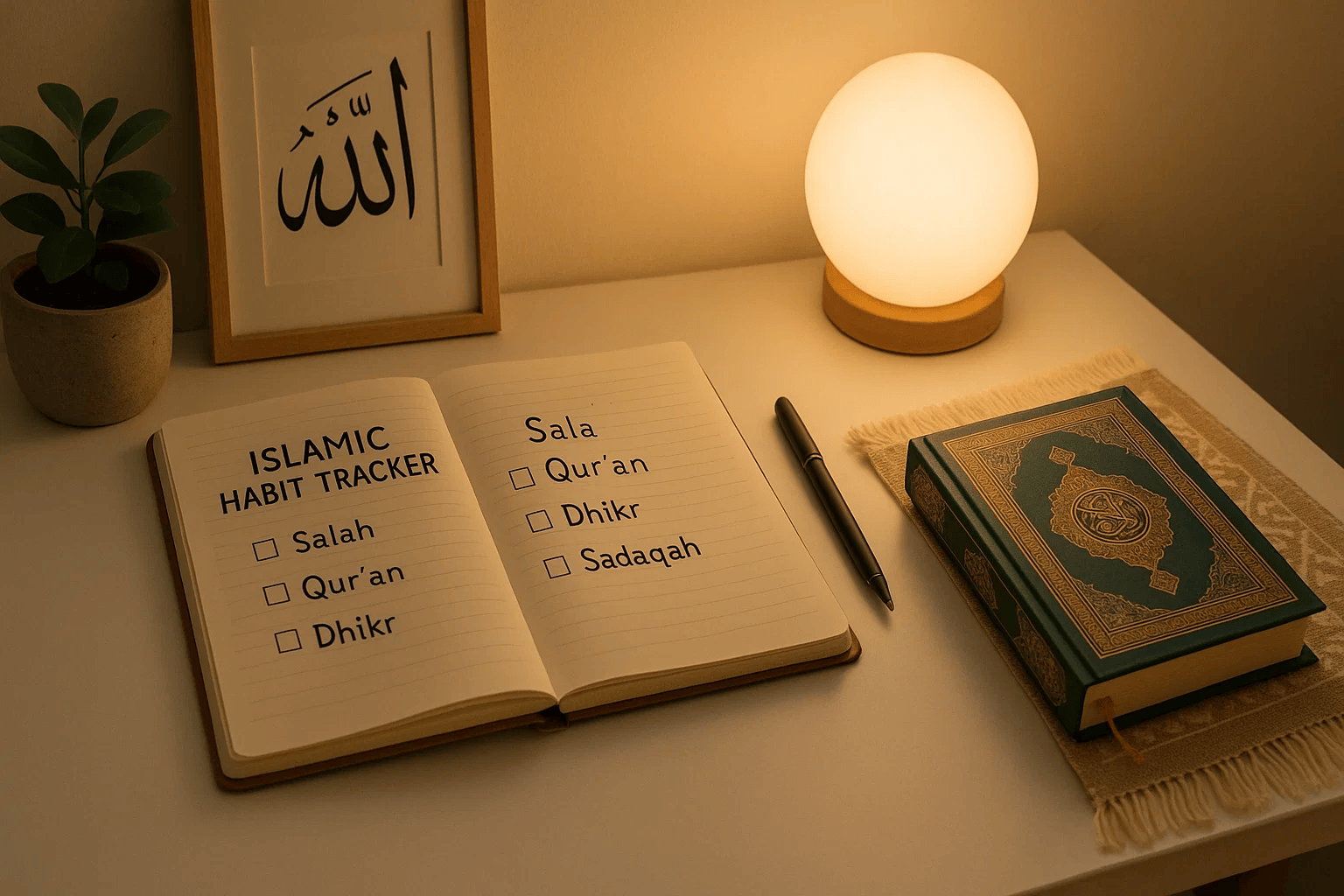
Essential Daily Islamic Habits for Every Muslim’s Life
Cultivating and maintaining positive practices is one of the most powerful ways to live a life that earns the pleasure of Allah Subhanahu Wa Ta’ala. Islam is a complete guide that illuminates every aspect of life, from how we interact with others to how we eat, rest, and worship. These practices are intended to be integrated as daily Islamic habits, shaping our character and strengthening our faith.
Whether we are focusing on establishing good habits in Islam, identifying bad habits, or learning the Islamic approach to overcoming them, the ultimate goal is to align our actions with the pure teachings of the Qur’an and the Sunnah.
In this comprehensive guide, we will explore ten foundational practices and their significance, alongside practical tips to integrate them into your routine. At Quranadept, we firmly believe that small, consistent actions lead to transformative spiritual growth and a richer Islamic lifestyle. Explore our faith-inspired resources designed to help you live by these beautiful Islamic habits every single day.
Ten Beautiful Islamic Practices to Adopt Daily
1. Begin Every Action with “Bismillah”
One of the simplest yet most profoundly impactful good habits in Islam is starting everything with Bismillah — “In the name of Allah.“ The Prophet Muhammad {Sallallahu Alaihi Wa Sallam} instructed us to recite this before eating, drinking, traveling, or commencing any activity.
Why it Matters:
Starting with Bismillah serves as a potent reminder that all success comes from Allah alone. It invokes blessings and provides a shield against the negative influence of $Shaytan$.
Tip for Consistency:
Use visual or digital reminders (e.g., phone wallpapers, sticky notes).
Make it a conscious practice before everyday tasks like cooking, working, or driving.
Hadith: “Every important word or matter that does not start with Bismillah is incomplete.” (Ibn Majah)
2. Establish Prayer ($Salah$) on Time
Salah (prayer) is the cornerstone of a Muslim’s life. Performing it precisely at its appointed time is a clear demonstration of discipline and faith, essential to maintaining daily Islamic habits.
How to Make it a Habit:
- Utilize a reliable prayer schedule or app.
- Prepare for Salah by performing Wudu (ablution) early.
- Strive to pray in congregation at the Masjid (mosque) whenever possible.
Qur’anic Reminder:
- “Indeed, prayer has been decreed upon the believers a decree of specified times.” (Qur’an 4:103)
Consistent Salah builds self-control, mindfulness, and a spiritual connection that naturally keeps us away from bad habits in Islam.
3. Spread Peace with Salaam
The greeting Assalamu Alaikum means “Peace be upon you”—it is not merely a custom but a sincere supplication (Dua) for the person you greet. This is a fundamental element of the list of good manners in Islam.
Benefits of $Salaam$:
- It promotes peace, unity, and love among believers.
- It earns great reward.
- It softens hearts and helps eliminate grudges.
Hadith:
- “You will not enter Paradise until you believe, and you will not believe until you love one another. Shall I tell you something which, if you do, you will love one another? Spread salaam among yourselves.” (Muslim)
4. Mindful Eating and Drinking (The Islamic Way)
Adhering to Islamic eating habits is crucial for both physical health and spiritual awareness.
Key $Sunnah$ Habits:
- Recite Bismillah before starting.
- Eat and drink with the right hand.
- Chew food well and take small bites.
- Practice moderation: the stomach should be divided into one-third for food, one-third for drink, and one-third for air.
Hadith:
- “The son of Adam does not fill any vessel worse than his stomach…” (Tirmidhi)
5. Maintain Cleanliness (Taharah)
The Prophet {Sallallahu Alaihi Wa Sallam} stated, “Cleanliness is half of faith.“ (Muslim). This habit covers personal hygiene, keeping clothes clean, and maintaining a tidy environment.
Practical Ways:
- Keep nails trimmed and hair neat.
- Brush teeth using a Miswak or toothbrush.
- Regularly wash hands, especially before and after meals.
- Ensure the home and prayer area are clean.
6. Uphold Truthfulness and Avoid Harmful Speech
Honesty is among the most valued good habits in Islam. Conversely, lying, backbiting ($Gheebah$), gossip, and slander are examples of destructive bad habits in Islam.
How to Improve Speech:
- Before speaking, consider: “Is it true? Is it necessary? Is it kind?”
- Replace idle talk with Dhikr (remembrance of Allah) or seeking beneficial knowledge.
- Practice Taqwa (consciousness of Allah) in your daily life.
Qur’an Reminder:
- “And speak the truth.” (Qur’an 33:70)
7. Respect Parents and Elders
In Islam, respecting and obeying parents is mentioned immediately after the worship of Allah, emphasizing the profound importance of good manners in Islam.
Ways to Show Respect:
- Speak gently, kindly, and humbly.
- Listen without interrupting.
- Offer assistance with household tasks.
- Constantly make Dua for their mercy and forgiveness.
Qur’an Reminder:
- “And lower to them the wing of humility out of mercy and say, ‘My Lord, have mercy upon them as they brought me up [when I was] small.’” (Qur’an 17:24)
8. Give Charity (Sadaqah) Regularly
Charity purifies both wealth and the soul.Sadaqah is not confined to money; as the Prophet {Sallallahu Alaihi Wa Sallam} taught, even a smile is an act of charity.
Practical Tips:
- Allocate a small, consistent portion of your income weekly for charity.
- Give food or clothing to the needy.
- Volunteer your time for community service.
Hadith:
- “Charity does not decrease wealth.” (Muslim)
9. Control Anger
Anger often leads to words or actions that we later regret. Islam highlights self-control as a supreme sign of strength.
Prophetic Advice for Controlling Anger:
- Seek refuge in Allah: A’udhu billahi min ash-shaytan ir-rajim.
- Change your posture (sit down or lie down).
- Perform Wudu to cool the temper.
Hadith:
- “The strong man is not the one who can overpower others, but the strong man is the one who controls himself when angry.” (Bukhari & Muslim)
10. End the Day with $Dhikr$ (Remembrance)
Before retiring for the night, the Prophet {Sallallahu Alaihi Wa Sallam} would recite specific chapters and verses (like Ayat-ul-Kursi, the last two verses of Surah Al-Baqarah, Surah Al-Ikhlas, Al-Falaq, and An-Nas) and blow over himself.
Benefits:
- Spiritual protection from harm during sleep.
- Attainment of peaceful rest.
- Ending the day in remembrance of Allah.
Instilling Islamic Manners in Children
Teaching islamic manners for students and young children from an early age is vital for building a strong foundation of faith and virtuous character.
- Using the Right Hand: Reinforce the $Sunnah$ of using the right hand for eating, drinking, giving, and receiving.
- Respect for Elders: Encourage standing when elders enter, careful listening, and assisting at home.
- Compassion: Teach kindness to all of Allah’s creation, such as caring for animals.
- Generosity: Encourage sharing and donating, fostering one of the best good habits in Islam.
- Truthfulness: Emphasize honesty, following the Prophet’s {Sallallahu Alaihi Wa Sallam} perfect example.
Breaking Bad Habits the Islamic Way
Overcoming negative habits requires sincere effort, consistent Dua, and a supportive environment.
Islamic Dua to Stop Bad Habits:
- “Allahumma inni a’udhu bika min munkaratil akhlaqi wal a’mali wal ahwa’i.” (O Allah, I seek refuge in You from undesirable manners, deeds, and desires.)
The Core Habits of Highly Successful Muslims
True success in Islam is not defined by worldly achievements but by a life lived in obedience to Allah. Highly successful Muslims often share these core daily Islamic habits:
- Consistent Salah: Protecting the five daily prayers and offering them on time.
- Regular Qur’an Recitation: Maintaining a daily connection with Allah’s Book.
- Daily Dhikr: Keeping the tongue moist with the remembrance of Allah.
- Integrity in Dealings: Being truthful and fair in all interactions, embodying the importance of good manners in Islam.
- Sincere Service: Helping people purely for the sake of Allah, without seeking praise.
Essential $Duas$ for Building Good Habits
Seeking Allah’s help through $Dua$ is an essential tool for consistency:
- For Help in Doing Good Deeds:
- “Allahumma a‘inni ‘ala dhikrika wa shukrika wa husni ‘ibadatik.” (O Allah, help me remember You, thank You, and worship You in the best manner.)
- Before Sleeping:
- Recite Ayat-ul-Kursi (Qur’an 2:255) and say SubhanAllah (33 times), Alhamdulillah(33 times), and Allah u Akbar (34 times).
Conclusion
These good habits in Islam are the means by which we align our lives with divine guidance. By building these into our daily Islamic habits, we protect ourselves from sin, strengthen our faith, and find peace in every aspect of our lives.
May Allah help us adopt these practices and guide us to success in this life and the Hereafter.