

9 Scientific Facts in the Quran That Will Astonish You
The Holy Quran was first revealed to Prophet Muhammad ﷺ in 609 C.E., during a period when scientific knowledge held little importance among people. Yet, within this divine scripture, countless scientific facts appear—facts that humanity discovered only centuries later. The Quran was revealed over a span of 23 years through the Angel Jibreel (A.S), and the Prophet’s noble companions preserved these revelations as scribes. Today, the Quran stands as the central text of Islam and a timeless source of guidance for all humanity.
Scientific Miracles in the Quran
The miraculous nature of the Quran is profound and multi-layered. Many of the world’s most groundbreaking scientific discoveries—such as the Big Bang, Big Crunch, genetics, embryology, oceanic barriers, and black holes—were referenced in the Quran long before modern science uncovered them.
Although the Quran is not a science book, its descriptions remarkably align with scientific realities. These verses, revealed over 1,400 years ago, prove that divine knowledge transcends human limitation. Science continues to confirm what the Quran stated centuries before.
1. The Big Bang Theory in the Quran
One of the most important scientific facts in the Quran relates to the creation of the universe. For centuries, people believed the universe always existed. This idea changed when Einstein’s equations showed the universe is expanding. Later, scientists concluded that this expansion must have begun from a single, dense, compact point—what is now known as the Big Bang.
The Quran, long before modern physics, revealed:
“Do not the disbelievers see that the heavens and the earth were a closed-up mass (ratqan), then We opened them out?” (Quran 21:30)
The term ratqan refers to something mixed, dense, and closed—exactly what scientists describe the pre-Bang universe to be. The Quran’s statement astonishingly matches the Big Bang model.
2. The Big Crunch Theory in the Quran
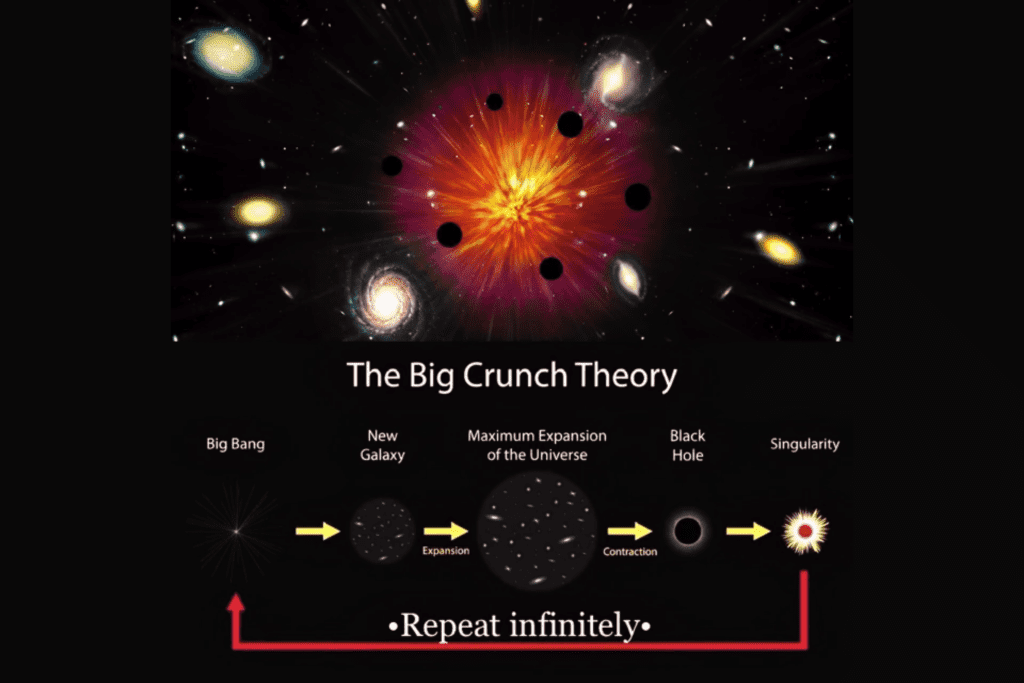
The Big Crunch is the scientific theory describing how the universe will end. It suggests that after expanding for billions of years, the universe will eventually reverse and collapse upon itself.
The Quran references this phenomenon beautifully:
“The Day when We will roll up the heavens like the rolling up of written scrolls.” (Quran 21:104)
This imagery of the heavens folding resembles what physicists describe as the universe collapsing inward. The Quran’s metaphor aligns with this scientific prediction of cosmic contraction.

3. The Meeting of Two Seas
When two bodies of water meet—such as seas or oceans—they maintain unique properties like temperature, color, and density. A natural barrier prevents them from mixing immediately.
This scientific fact in the Quran is stated in:
“He released the two seas, meeting side by side; between them is a barrier so neither transgresses.” (Quran 55:19-20)
Oceanographers discovered this only recently, yet the Quran mentioned this phenomenon over 14 centuries ago.
4. Embryology in the Quran
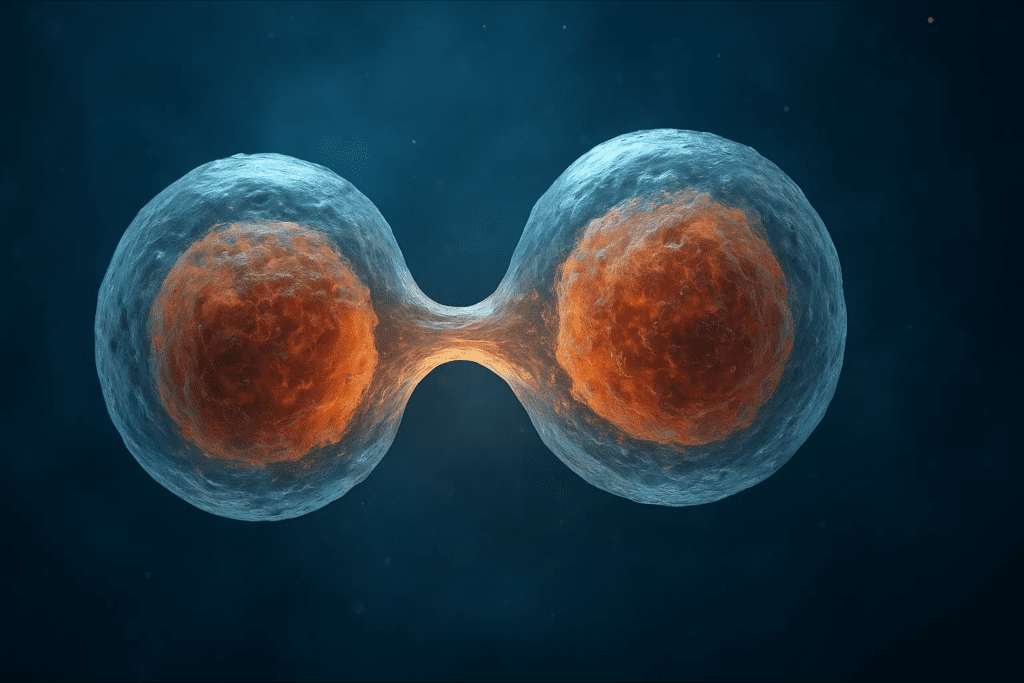
Embryology—the study of embryo development—was completely unknown during the time of revelation. Yet the Quran describes human creation with astonishing accuracy:
“We created man from an extract of clay, then as a drop placed in a secure resting place. Then the drop becomes an ‘alaqah (clinging substance), then a mudghah (chewed-like lump)…” (Quran 23:12-14)
The word ‘alaqah has three meanings:
- a leech
- something that clings
- a blood clot
Each meaning accurately matches early embryo development:
- it clings to the womb
- resembles a leech in behavior
- and is like a clot due to limited blood flow
Modern embryologists, including Dr. Keith Moore, later verified the accuracy of this description.
5. Iron Sent Down to Earth
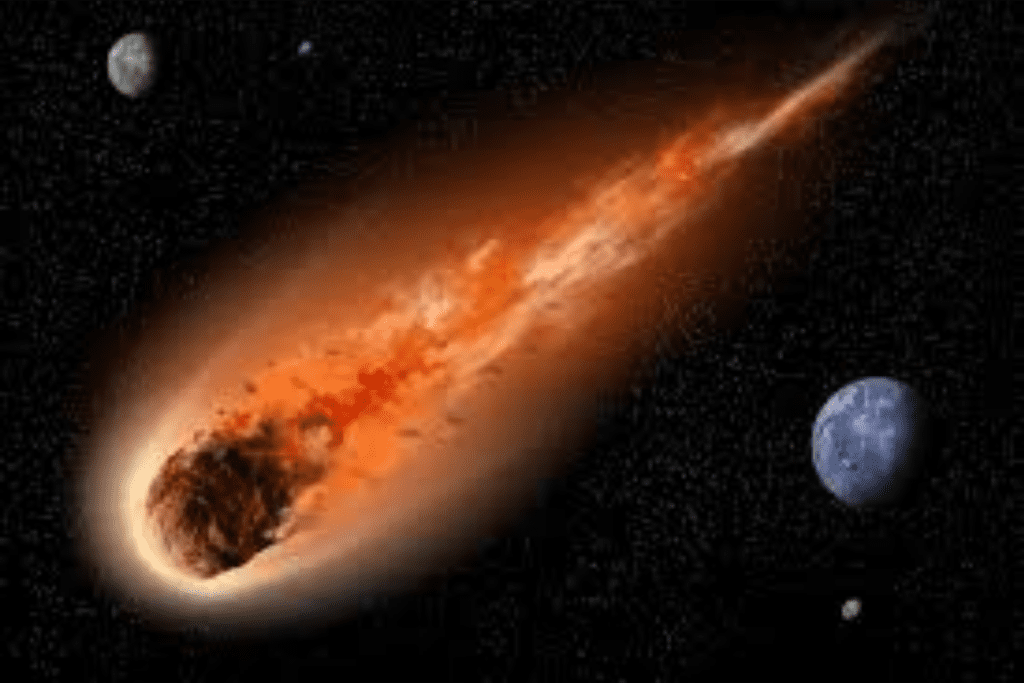
Scientific studies show that iron did not originate on Earth. It came from massive stars that exploded in space, sending iron-bearing meteorites to Earth.
The Quran states:
“And We sent down iron with great strength and many benefits for humanity.” (Quran 57:25)
The phrase “sent down” perfectly aligns with the scientific understanding that iron arrived from beyond our planet.

6. Formation of Clouds
The Quran explains cloud formation in a remarkably detailed manner:
“Have you not seen how Allah makes the clouds move gently, then joins them together, then makes them into a stack, and you see the rain emerge from it?”
This mirrors modern meteorological science:
- Wind pushes clouds gently
- Nearby clouds merge
- Vertical updrafts stack clouds
- Rain forms and falls
Science only discovered this process in the last 200 years, yet the Quran described it precisely.
7. Pain Receptors in the Skin
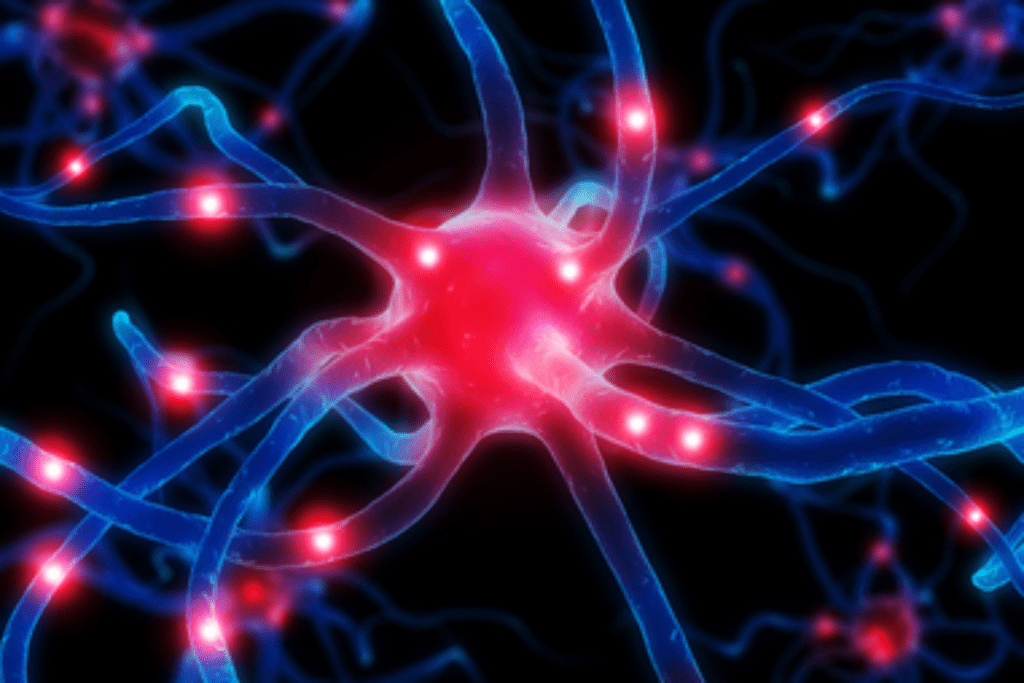
Scientists once believed pain was only processed by the brain. Modern research shows pain receptors exist in the skin, which is why damaged skin affects sensation.
The Quran revealed:
“When their skins are burnt away, We will replace them with new skins so they may continue to feel the punishment.”
This reference shows that feeling pain is linked to the skin, not just the brain—another scientific truth confirmed long after the revelation.

8. Internal Waves in the Ocean
Surface waves are visible, but deep beneath the ocean are internal waves, created when dense water meets less dense layers.
The Quran mentions:
“Darkness in a deep sea: covered by waves, above which are waves, above which are clouds…”
This refers to multiple layers of waves, including those beneath the surface—something unknown until oceanographers explored deep waters.
9. The Human Frontal Lobe
The Quran describes the forehead of Abu Jahl as:
“A lying, sinful forehead.”
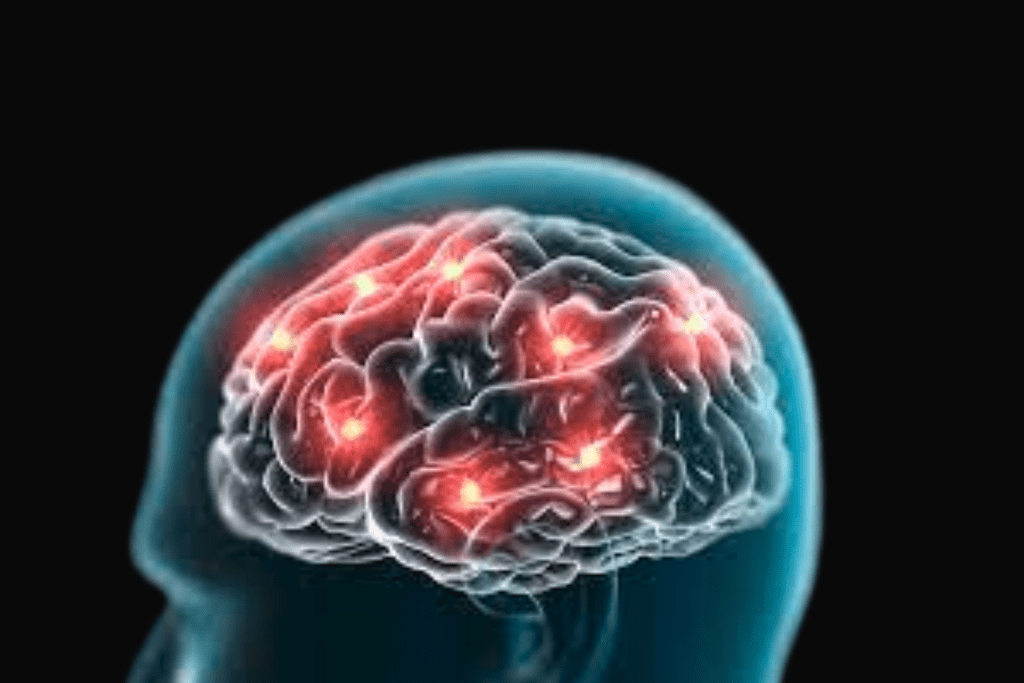
The frontal lobe—located behind the forehead—is responsible for:
- planning
- decision-making
- moral judgment
- lying
Science now confirms that acts of deceit originate in this area. The Quran highlighted this anatomical truth long before neuroscience.
Conclusion
The Quran’s scientific references — from the universe’s creation to human anatomy — reveal its divine origin. While science serves as proof, these facts were already mentioned over 14 centuries ago, demonstrating that the Quran is a timeless source of both spiritual and empirical knowledge. By exploring these facts, believers can deepen their faith and appreciation for the Quran’s unparalleled wisdom.
Suggested Read: Ulum Al-Qur’an (Qur’anic Sciences) | Part 2 | The Revelation of the Quran
Suggested Read: ʻUlum Al-Qur’an (Qur’anic Sciences)
Suggested Read: Daily Islamic Habits: 10 Good Habits in Islam Every Muslim Should Practice